

Suboxone Therapy in Asheville, NC
Suboxone therapy offers a critical pathway to overcoming opioid addiction, and Dr. Jonathan Hall, MD, together with our compassionate team, is dedicated to guiding you every step of the way. We develop personalized treatment plans tailored to your specific needs and goals, ensuring a supportive and effective approach to help you achieve lasting recovery and improved well-being. For more information, contact us today or schedule an appointment online. We are conveniently located at 875 A Tunnel Rd, Asheville, NC 28805.
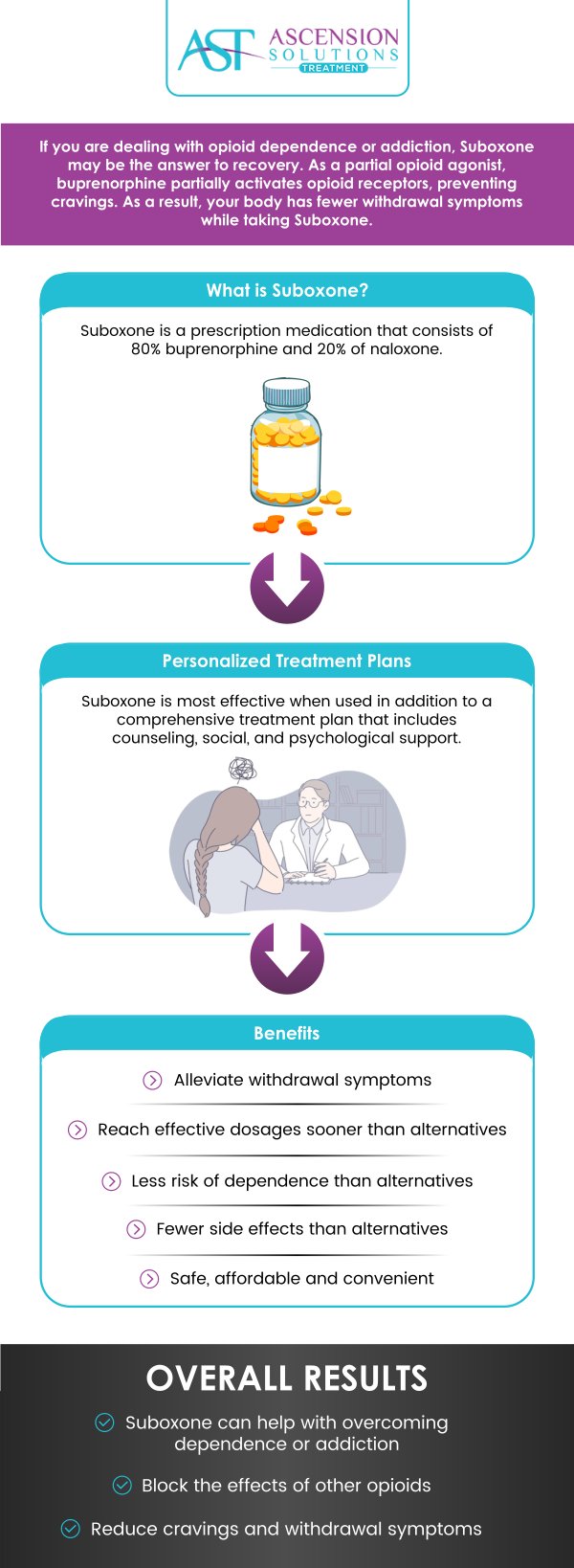
Table of Contents:
What does suboxone do to your brain?
How long can you be prescribed suboxone?
What are the long-term side effects of buprenorphine?
What are the program requirements during treatment with suboxone?
Why Should You Choose Dr. Jonathan Hall, MD, for Suboxone Therapy at Ascension Solutions Treatment?
Suboxone is a combination medication used for the treatment of opioid dependence, misuse, and abuse, commonly known as opioid use disorder. It works by attaching to opioid receptors in the brain, which reduces cravings and minimizes withdrawal symptoms. It is a combination of the opioid drug buprenorphine, and naloxone, a drug that blocks the effects of opioids in the brain. The naloxone in Suboxone blocks the opioid effects of buprenorphine, which reduces cravings for opioids but does not produce psychoactive effects.
Suboxone, a brand name for the combination of two drugs, buprenorphine, and naloxone, is commonly used as a medication to treat opioid addiction. Suboxone works by occupying the same receptors in the brain as other opioids, preventing opioids from causing more intense psychotropic effects. Suboxone is known as a partial opioid agonist, meaning that it performs the same function in the brain as other opioids but is weaker and causes fewer side effects. Because of its effects as an opioid agonist, it is used to help people manage their opiate cravings and reduce the likelihood of relapse. Suboxone is also commonly used to treat opioid overdoses due to the way it interferes with the effects of opioids in the brain and central nervous system.
In most cases, Suboxone is prescribed for a period of six to twelve months, although some individuals will need to take it for a longer duration. The normal length of Suboxone therapy generally lasts for a year, but many doctors realize that treating addiction is a long-term goal and therefore longer periods may be necessary for some situations. It is more important to prevent relapse and future opioid use than it is to adhere to a specific schedule and treatment duration.
Because its effects are relatively mild, buprenorphine has become the leading choice for the treatment of opioid use disorder. However, upon cessation of buprenorphine, many users report going through withdrawal symptoms similar to other opioids, such as irritability, nausea, sweating, and muscle weakness. Nevertheless, as the effects are generally far less severe, the vast majority of users who experienced the withdrawal symptoms still recommend its use. Short-term side effects of buprenorphine include dry mouth, constipation, and sweating.
Due to its relatively short time on the market, the long-term effects of buprenorphine have not been extensively studied; however, some researchers suggest that they may be similar to those of other opioids. Upon cessation, some long-term effects of buprenorphine may persist, including common side effects such as depression, fatigue, insomnia, and less commonly nausea, confusion, and physical weakness.
Suboxone treatment programs have specific requirements that must be met for a patient to receive this type of treatment. These include:
• Understanding of the guidelines for treatment
• Commitment to treatment for opioid addiction
• Following through with the doctor’s scheduled visits
• Not using any alcohol, opioids, or benzodiazepines
• Must participate in random screenings
• Cannot request an early refill
• Cannot request a refill without an appointment
• Must take medication as prescribed
Suboxone programs have strict requirements due to their potential for abuse; the monitoring physician will provide the specific details required for program adherence.
Dr. Jonathan Hall, MD, offers effective Suboxone therapy at Ascension Solutions Treatment. Suboxone therapy is a cornerstone of medication-assisted treatment for opioid addiction, providing relief from cravings and withdrawal symptoms. Dr. Hall’s expertise ensures that each patient’s treatment plan is tailored to their individual needs, maximizing the effectiveness of the therapy. His approach integrates Suboxone with counseling and support to address both the physical and emotional aspects of recovery.
With Dr. Hall’s compassionate and patient-centered care, individuals can feel confident in their journey to recovery. He focuses on helping patients not just manage their addiction, but thrive in long-term sobriety. By combining the benefits of Suboxone therapy with counseling, Dr. Hall creates a comprehensive recovery experience that empowers patients to rebuild their lives and achieve lasting wellness.
If you or someone you know is struggling with opioid use disorder, come to Ascension Solutions Treatment today for professional care. For more information, contact us today or schedule an appointment online. We are conveniently located at 875 A Tunnel Rd, Asheville, NC 28805. We serve patients from Asheville NC, Weaverville NC, Arden NC, Candler NC, Swannanoa NC, Woodfin NC, and the surrounding areas.

Read Our Latest Google Reviews



Additional Services You May Need
▸ Addiction
▸ Medication Assisted Treatment
▸ Suboxone Treatment
▸ Behavioural Therapy
▸ Detox
▸ Vivitrol
▸ Sublocade
▸ Buprenorphine
▸ Depression
▸ Anxiety Disorder
▸ Subutex
▸ Alcohol Detox
▸ Brixadi
▸ Regenerative Medicine
▸ Ozone Therapy
▸ Spravato Treatment
▸ Hormone Replacement Therapy


 Send Text
 How May I Help You?