

What Are the Stages of Addiction?
Addiction progresses through several stages: experimentation, regular use, dependency, and full-blown addiction. In the early stages, individuals may experiment with a substance or behavior, leading to regular use and eventual dependence. As addiction develops, cravings and compulsive behaviors take over, often despite negative consequences. Recognizing these stages early is key to effective treatment. Dr. Jonathan Hall, MD, at Ascension Solutions Treatment, is dedicated to helping individuals identify these signs and offering personalized care to support a successful recovery. Contact us today for more information or schedule an appointment online. We are conveniently located at 3780 Holcomb Bridge Road Suite D2, Peachtree Corners, GA 30092.
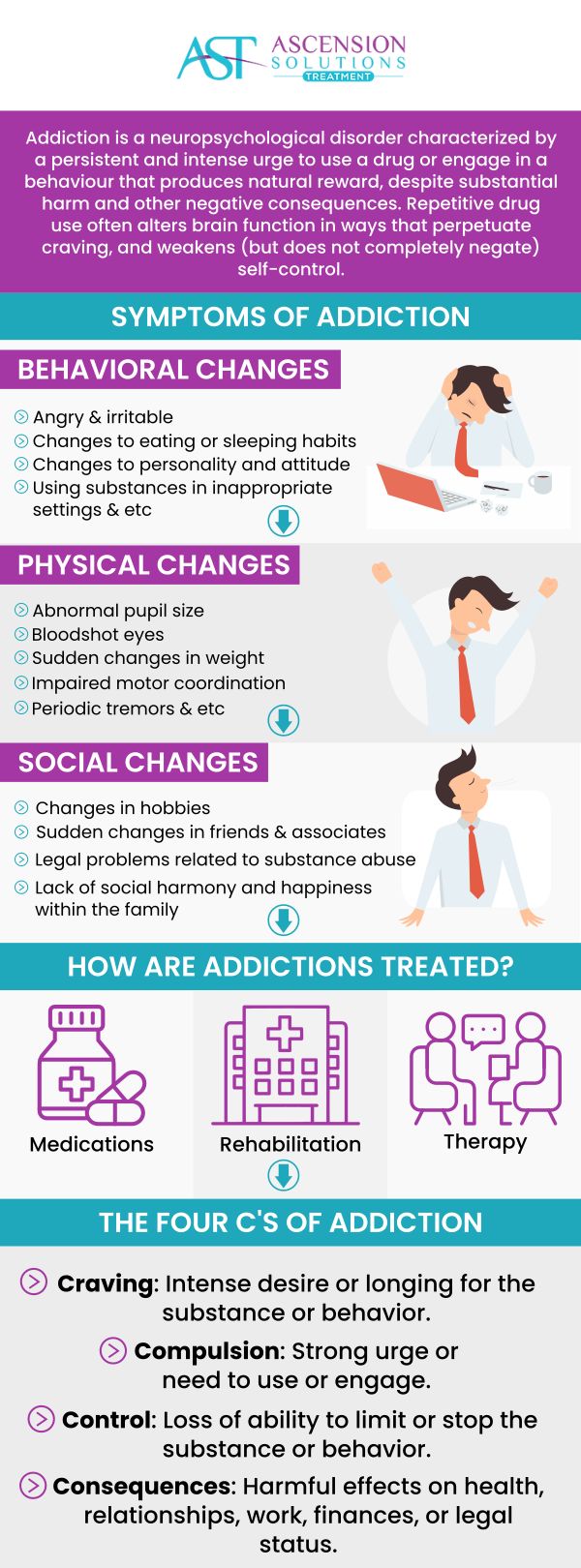
Table of Contents:
What causes addiction in a person?
What are the signs and symptoms of addiction?
What are the levels of addiction?
Is dependence the same as addiction?
What are the four stages of addiction?
How quickly can I get an appointment for addiction treatment in Peachtree Corners, GA?
Do you offer outpatient addiction treatment?
Are my addiction treatment appointments confidential?
How does Dr. Jonathan Hall, MD, assess and treat addiction?
How Can Dr. Jonathan Hall, MD, Help Identify the Signs and Symptoms of Addiction?
Realizing and admitting that you are dealing with an addiction can be incredibly difficult to do. So, if you have taken that courageous step, you should be encouraged. If you are looking for an addiction treatment specialist in Peachtree Corners, GA, our team is here to support you. At the same time, whether you are dealing with an addiction or someone you care about, you likely have a lot of questions. We do our best to answer some of those questions below to provide you with a greater understanding of addiction and how it works.
Addiction is complex. As such, the causes of addiction are diverse and sometimes unclear. While the physical cause of addiction involves processes and mechanisms of reward, motivation, and memory in your brain through dopamine release, it is not always clear why some individuals experience addiction and others do not.
In general, addiction occurs when a particular substance or behavior becomes associated in your brain with dopamine release. Dopamine release is your brain’s uniform response to any pleasure you experience, whether from a psychoactive substance, sexual activity, enjoying another’s company, or eating good food. With your memory, you recall the pleasure such substances or activities initiated, which motivates you to partake or pursue those substances or activities to achieve the reward of dopamine release. These processes are normal and integral to our ability to enjoy the world around us.
However, with addiction, dopamine release is exclusively or almost exclusively associated with one substance or activity. As a result, addiction causes a person to intensely crave and pursue a particular substance or activity in an uncontrolled way, often without regard for adverse consequences. In this way, the brain’s memory and motivation centers are harmfully subservient to its reward center rather than working with it in unison.
Several risk factors can increase one’s risk of experiencing addiction, which include the following:
• Genetics or family history of addiction
• Past traumatic experiences, including physical, sexual, or verbal abuse, neglect, death of a loved one, witnessing a traumatic event, parental divorce, and others
• Presence of mental illness, such as anxiety, depression, or post-traumatic stress disorder (PTSD)
• Various environmental factors, such as high drug use rates in one’s community, peer pressure, lack of parental guidance, parental drug use, and presence of drugs at home or school
The signs and symptoms of addiction vary with each individual dealing with addiction. At the same time, there are some signs and symptoms that commonly occur with such individuals, such as the following:
• Decreased trustworthiness, including an increase in lying, stealing, or secrecy
• Drug use equipment in their home
• Escalating use of or engagement in addictive behavior or substance
• Feeling an intense craving to engage in a behavior or consume a substance at all costs regardless of consequences
• Frequent unexplained things that seem urgent
• Lack of financial stability
• Most of the individual’s time is spent on both planning, engaging or partaking, and recovering from an addictive behavior or substance
• Tolerance, or the need to engage or partake in addictive behavior or substances more frequently to obtain the same high or desired effect
• Unusually small or large pupils
• Weight loss or weight gain
• Withdrawal, which are negative and unpleasant symptoms that occur when the addicted individual does not engage or partake in addictive behavior or substances
The four levels or stages of addiction involve experimentation, regular use, dependency and tolerance, and full-scale addiction.
With the first level, experimentation, an individual engages in a behavior or substance use for the first time out of curiosity without any intention of becoming addicted.
The second level—regular use—is a progression from the initial exposure to the behavior or substance, as it becomes commonplace in the individual’s life, and they may also find that their life is less enjoyable when they are not engaging in the behavior or using the substance.
The third level of dependency and tolerance involves a physical and psychological reliance on the behavior or substance. Not only does the individual depend on the substance or activity in increasing amounts to achieve a desired feeling or effect, but they also experience physical and psychological changes in their body.
Finally, full-scale addiction occurs when the individual adapts to the physical and psychological changes from the substance or activity and becomes exclusively or predominantly focused on satisfying their addictive cravings, regardless of any adverse effects it has on their personal and professional life. Our team offers targeted behavioral therapy to help patients at any of these stages safely navigate their recovery.
Dependence refers to the physical adaptation of the body to a substance, which leads to withdrawal symptoms when the substance is not available. It occurs when a person regularly uses a substance, and over time, their body becomes accustomed to it, requiring higher doses to achieve the same effect. This process is known as tolerance. Dependence can occur without the person necessarily engaging in harmful behaviors or developing a psychological need for the substance. For instance, people may develop dependence on medications like painkillers or antidepressants under the supervision of a doctor, but they may not misuse them.
Addiction, on the other hand, is a complex brain disease that involves both physical and psychological dependence. It is characterized by compulsive substance use or engagement in a behavior despite harmful consequences. Addiction affects the brain’s reward system, creating an overwhelming desire to use the substance or engage in the behavior. This leads to a loss of control, and the individual continues using the substance or engaging in the behavior even when it causes physical, emotional, or social harm. Unlike dependence, addiction is often accompanied by changes in mood, behavior, and daily functioning.
While dependence can be a part of addiction, not everyone who is dependent on a substance is addicted to it. For example, a person who is dependent on a prescription medication for pain may not be addicted if they follow their doctor’s instructions and use the medication as prescribed. However, addiction involves a more significant loss of control and a continued need for the substance or behavior despite negative outcomes.
Both conditions can benefit from professional treatment and support, and Dr. Jonathan Hall, MD, at Ascension Solutions Treatment, provides specialized care for patients in Peachtree Corners, GA, for individuals struggling with both dependence and addiction.
What are the four stages of addiction?
Addiction progresses through four stages: experimentation, regular use, physical dependency and tolerance, and full-blown addiction. By the final stage, the individual focuses solely on fulfilling cravings, often at the expense of their life. At our Peachtree Corners, GA clinic, Dr. Jonathan Hall provides targeted behavioral therapy to help individuals recover at any stage.
We understand that seeking help is urgent. You can schedule a confidential assessment with our addiction doctor in Peachtree Corners, GA by calling our clinic directly or requesting an appointment online to find the earliest available opening.
Yes. Our Peachtree Corners clinic specializes in outpatient care. This allows you to receive expert addiction treatment and ongoing medical support while continuing to live at home, go to work, and maintain your daily responsibilities.
Yes, your privacy is our top priority. We strictly adhere to all HIPAA regulations. From the moment you contact our Peachtree Corners, GA office, your medical records, treatment plans, and visits are kept entirely confidential.
Dr. Jonathan Hall conducts thorough, patient-centered evaluations to uncover both the behavioral triggers and physical realities of your condition. By diagnosing the issue early, he creates highly customized recovery plans—incorporating medication-assisted treatment (MAT)—to help patients in Peachtree Corners, GA achieve lasting, sustainable sobriety.
Dr. Jonathan Hall, MD, a highly-rated addiction doctor in Peachtree Corners, GA, specializes in recognizing the signs and symptoms of addiction and providing comprehensive assessments to help identify the condition early. Addiction often presents itself in both physical and behavioral changes, including an overwhelming urge to use substances, an inability to control usage, and engaging in risky behaviors. Dr. Hall uses his expertise to evaluate both the physical and psychological aspects of addiction, tailoring treatment plans that address the root causes and help individuals regain control over their lives. By focusing on early intervention, he is able to guide patients toward effective treatment options that align with their recovery goals.
At Ascension Solutions Treatment in Peachtree Corners, GA, Dr. Hall takes a compassionate, patient-centered approach to addiction care. He works closely with each individual to understand their unique struggles and symptoms, ensuring that all aspects of their addiction are addressed. Whether it’s identifying the physical signs of dependence or the emotional triggers of addictive behavior, Dr. Hall provides the support and guidance needed for lasting recovery. His goal is to help patients recognize the signs of addiction early and receive the right treatment, setting them on a path to a healthier, addiction-free life. For more information, contact us or request an appointment online. We are conveniently located at 3780 Holcomb Bridge Road Suite D2, Peachtree Corners, GA 30092. We serve patients from Peachtree Corners GA, Roswell GA, Johns Creek GA, Alpharetta GA, Dunwoody GA, Duluth GA, Norcross GA, and the surrounding Metro Atlanta areas.

Read Our Latest Google Reviews



Additional Services You May Need
▸ Addiction
▸ Medication Assisted Treatment
▸ Suboxone Treatment
▸ Behavioural Therapy
▸ Detox
▸ Vivitrol
▸ Sublocade
▸ Buprenorphine
▸ Depression
▸ Anxiety Disorder
▸ Subutex
▸ Alcohol Detox
▸ Brixadi
▸ Regenerative Medicine
▸ Ozone Therapy


 Send Text
 How May I Help You?