

Opioid Dependence Vs Addiction: What’s the Difference?
While often confused, opioid dependence is a physical reliance causing withdrawal, whereas addiction involves compulsive drug-seeking behavior despite negative consequences. Both can severely impact your health and wellness, but lasting recovery is entirely possible. Compassionate opioid dependence and addiction treatment is available at Ascension Solutions Treatment in Peachtree Corners, GA, under the care of Dr. Jonathan Hall, MD. Contact us or schedule an appointment today to learn more. We are conveniently located at 3780 Holcomb Bridge Road Suite D2, Peachtree Corners, GA 30092.
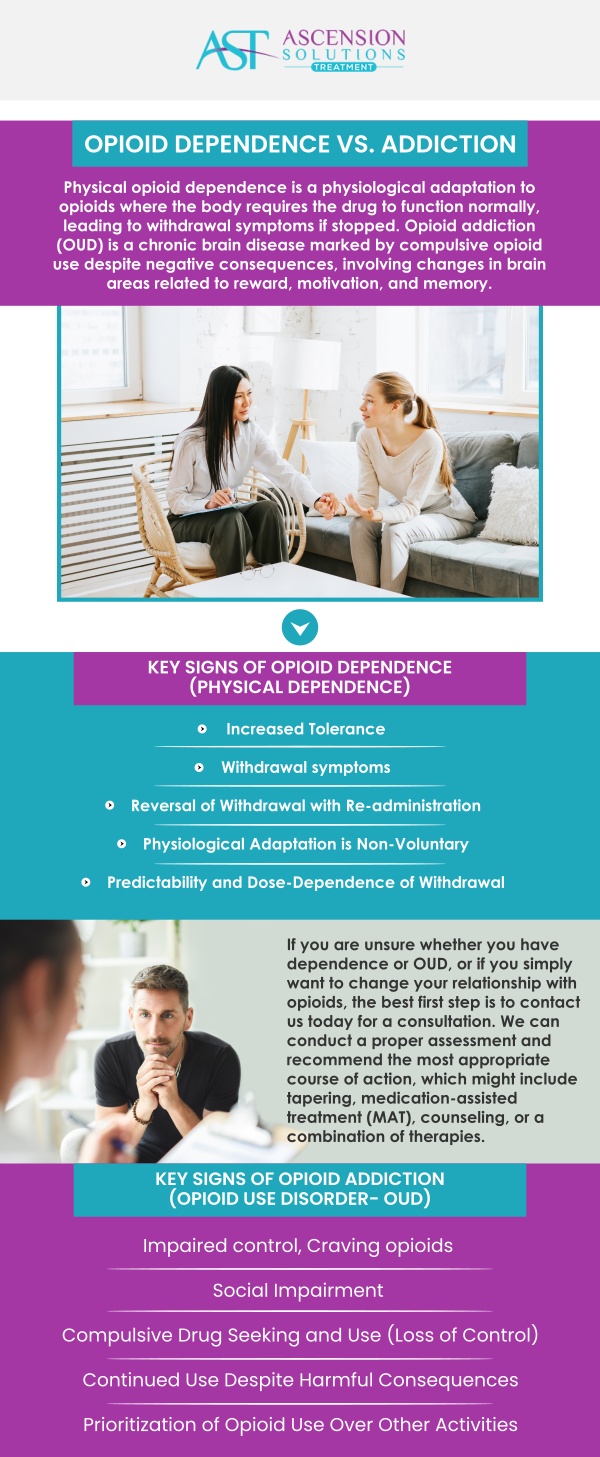
Table of Contents:
What is considered drug dependence?
What is opioid dependence?
What is considered an addiction?
Is there a difference between opioid dependence and addiction?
Can I be dependent on a drug without being addicted?
What are the signs of opioid dependence?
Does opioid dependence always lead to addiction?
How does Dr. Jonathan Hall treat opioid dependence and addiction?
Understanding Opioid Dependence vs. Addiction with Dr. Jonathan Hall, MD at Ascension Solutions Treatment Center in Peachtree Corners, GA
You become dependent on drugs when you need them to function. In the past, the American Psychiatric Association (APA) distinguished between dependence and abuse. Abuse was defined as the mild or early phase of inappropriate drug use that led to dependence. The problem of dependence was considered greater than the problem of abuse by most people.
Despite being dependent on drugs, one does not have to be addicted to them. It is possible to become dependent on a substance due to a bodily response to it. Medications often contribute to this if you rely on them to treat chronic medical conditions.
There are many different ways drug dependence can develop. For instance, it is common for people to take prescription medications to treat pain or another medical condition and this type of use can develop into a substance use disorder in some cases. A drug user typically passes through certain stages before becoming dependent on drugs.
In terms of opioid dependency or addiction, many people think of street-obtained opioids such as heroin or fentanyl. Opioid misuse can also occur when you improperly take prescribed opioid medications, such as oxycodone, morphine, or codeine, or take an opioid medication that has not been prescribed to you.
The use of opioids is usually prescribed for the treatment of severe pain. Abusing opioids can produce intense feelings of pleasure or euphoria, but they can also cause fatal overdoses. When taken as prescribed, opioids are an effective medication, but their powerful effects can lead to addiction.
It is possible to suffer from opioid use disorder (OUD) by misusing prescribed opioid medications, diverting opioid medications, or using illicitly sourced heroin. OUD is typically characterized by chronic, relapsing illnesses associated with high mortality and morbidity rates.
Having an addiction means not being able to control what you do, take, or use to the point where it may cause harm. The most common addictions are gambling, drugs, alcohol, and smoking, but anything can become addictive. Various factors contribute to the onset of addictions. Substances like drugs, alcohol, or nicotine can affect your physical and mental well-being. It is possible to enjoy these feelings and have a powerful urge to use the substances again after experiencing them. Gambling may also result in a similar mental “high” after a win, followed by a strong desire to recreate it. In some cases, this can become a very difficult habit to break.
Addictions regularly involve an individual continuing to pursue the same substances or behaviors regardless of whether or not they become problematic. For this reason, addiction can cause disruptions and consequences to an individual’s health and all aspects of their life.
The brain is changed by opioids and tolerance develops, which means that a higher dose is needed over time to achieve the same effect. People who take opioids for long periods develop a dependence on the drug, resulting in physical and psychological symptoms of withdrawal (such as muscle cramps, diarrhea, and anxiety). Although all individuals who take opioids for an extended period will become dependent, only a small percentage will also develop an addiction, an ongoing need for the drug that characterizes addiction.
Overdose is one of the most serious consequences of opioid addiction. Unless the overdose is treated immediately, high doses of opioids can cause breathing to slow or stop, resulting in unconsciousness and death. It is possible to overdose on opioids whether they are legal or illegal if a person takes too much, or if opioids are combined with other drugs (particularly tranquilizers called benzodiazepines).
Can I be dependent on a drug without being addicted?
Yes. It is very common to become physically dependent on certain prescription medications (like those used for chronic pain) simply because your body adapts to them over time. This can happen even if you are taking the medication exactly as prescribed by your doctor.
The most common sign of opioid dependence is experiencing physical and psychological withdrawal symptoms when the medication is stopped or the dose is lowered. These symptoms can include muscle cramps, diarrhea, sweating, and severe anxiety.
No. While anyone who takes opioids for an extended period of time will develop a physical dependence, only a small percentage of those individuals will develop an active addiction, which involves an ongoing, uncontrollable craving for the drug.
Dr. Hall provides compassionate evaluations at Ascension Solutions Treatment to determine whether you are experiencing dependence, addiction, or both. He uses evidence-based strategies and Medication-Assisted Treatment (MAT) to create customized plans designed to restore balance and promote long-term recovery.
Opioid dependence and addiction often overlap but have distinct meanings. At Ascension Solutions Treatment Center, Dr. Jonathan Hall, MD, helps patients understand the difference—dependence is the body’s physical adaptation, while addiction includes compulsive behaviors despite harm. His personalized care focuses on identifying both the physiological and psychological components of opioid use.
Dr. Hall provides compassionate evaluations to determine whether a patient is experiencing dependence, addiction, or both. Using evidence-based strategies, he builds customized treatment plans designed to restore balance and promote long-term recovery. Patients trust his patient-centered approach to guide them toward sustainable healing.
Contact us or schedule an appointment today to learn more. We are conveniently located at 3780 Holcomb Bridge Road Suite D2, Peachtree Corners, GA 30092. We serve patients from Peachtree Corners GA, Roswell GA, Johns Creek GA, Alpharetta GA, Dunwoody GA, Duluth GA, Norcross GA, and the surrounding Metro Atlanta areas.

Read Our Latest Google Reviews



Additional Services You May Need
▸ Addiction
▸ Medication Assisted Treatment
▸ Suboxone Treatment
▸ Behavioural Therapy
▸ Detox
▸ Vivitrol
▸ Sublocade
▸ Buprenorphine
▸ Depression
▸ Anxiety Disorder
▸ Subutex
▸ Alcohol Detox
▸ Brixadi
▸ Regenerative Medicine
▸ Ozone Therapy
▸ Spravato Treatment
▸ Hormone Replacement Therapy


 Send Text
 How May I Help You?