

What Opioid Withdrawal Symptoms May Improve With Suboxone Treatment?
Suboxone treatment may help reduce opioid withdrawal symptoms and cravings as part of a comprehensive treatment plan for opioid use disorder. Symptoms such as muscle aches, restlessness, abdominal cramping, nausea, diarrhea, sleep difficulties, and persistent cravings may become more manageable with appropriate treatment. At Ascension Solutions Treatment, Dr. Jonathan Hall, MD, and our team evaluate each patient’s withdrawal symptoms, opioid use history, and overall health to determine an individualized approach to Suboxone treatment and ongoing recovery support. For more information, contact us or request an appointment online. We are conveniently located at 3780 Holcomb Bridge Road Suite D2, Peachtree Corners, GA 30092.

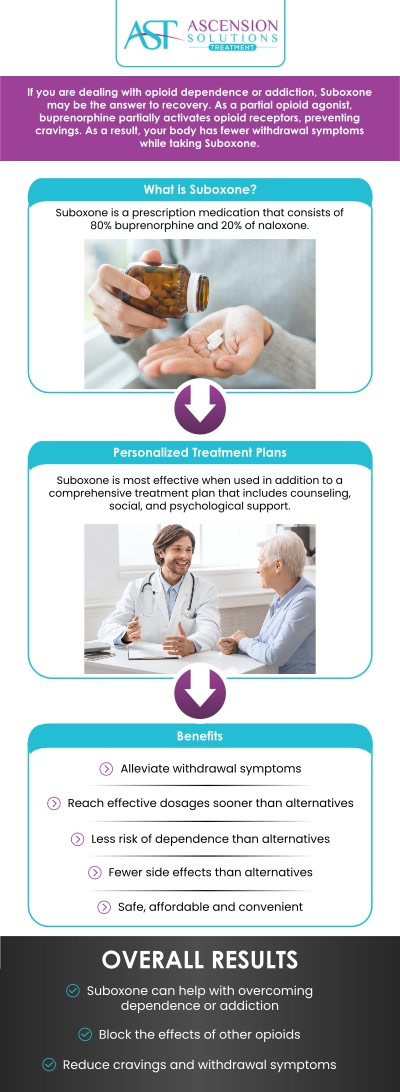
Table of Contents:
Can Suboxone reduce opioid cravings, body aches, nausea, and restlessness?
How quickly may opioid withdrawal symptoms improve after starting Suboxone?
Why must withdrawal symptoms begin before the first Suboxone dose?
What should patients do if withdrawal symptoms continue during Suboxone treatment?
How Do Dr. Jonathan Hall, MD, and the Team at Ascension Solutions Treatment Help Manage Opioid Withdrawal Symptoms With Suboxone?
Suboxone may help reduce opioid cravings and ease common withdrawal symptoms such as body aches, nausea, and restlessness. Buprenorphine, one of its active ingredients, partially activates opioid receptors, which can help stabilize the body during withdrawal and reduce the intense cravings that may contribute to continued opioid use.
By helping control both physical withdrawal symptoms and cravings, Suboxone can make the early stages of opioid use disorder treatment more manageable for some patients. Response can vary, so treatment should be guided by a qualified clinician who can evaluate symptoms, monitor progress, and adjust the care plan when necessary.
At Ascension Solutions Treatment, our team develops personalized Suboxone treatment plans based on each patient’s opioid use history, withdrawal symptoms, cravings, overall health, and recovery goals. Ongoing monitoring and supportive care help ensure that Suboxone is used safely as part of a broader approach to opioid use disorder recovery.
Opioid withdrawal symptoms may begin to improve relatively soon after starting Suboxone, although the exact timing varies from person to person. Buprenorphine helps reduce withdrawal symptoms and cravings by partially activating opioid receptors, and improvement may occur within the first several hours after an appropriately timed dose.
Over the first day or several days, symptoms such as muscle aches, nausea, sweating, restlessness, gastrointestinal discomfort, and cravings may continue to become more manageable as treatment is adjusted. The response depends on factors such as the opioid previously used, severity of dependence, timing of the last opioid dose, withdrawal intensity, and the prescribed Suboxone dose.
At Ascension Solutions Treatment, our clinical team evaluates each patient before starting Suboxone and monitors their response during treatment. Starting buprenorphine too soon after other opioids can trigger precipitated withdrawal, so appropriate timing and individualized dosing are important for helping patients stabilize safely and comfortably.
With a standard Suboxone induction, withdrawal symptoms usually need to begin before the first dose because buprenorphine binds very strongly to opioid receptors. If it is taken while full opioid agonists are still actively occupying those receptors, buprenorphine can rapidly displace them and trigger sudden, intensified withdrawal known as precipitated withdrawal.
Waiting until early or moderate withdrawal is present helps indicate that the effects of the previously used opioid are decreasing enough for buprenorphine to be introduced more safely. The appropriate timing can vary depending on the opioid used, how recently it was taken, and other individual factors, so patients should follow clinical guidance rather than starting Suboxone on their own.
Before starting Suboxone, our clinical team at Ascension Solutions Treatment reviews each patient’s withdrawal symptoms, recent opioid use, medical history, and other important health considerations. This individualized approach helps determine the appropriate timing for induction while reducing the risk of precipitated withdrawal and supporting a safer transition into ongoing opioid use disorder treatment.
If opioid withdrawal symptoms continue during Suboxone treatment, patients should contact their clinical team rather than changing the dose or treatment schedule on their own. Buprenorphine is intended to reduce withdrawal symptoms and cravings, but some patients may need additional assessment or treatment adjustments to achieve adequate symptom control.
Persistent symptoms may be related to factors such as the timing of the first dose, the type and amount of opioids previously used, or whether the current buprenorphine dose is adequately controlling withdrawal. A sudden increase in withdrawal symptoms after starting Suboxone may be a sign of precipitated withdrawal and should be assessed promptly by a qualified healthcare professional.
At Ascension Solutions Treatment, our clinical team can reassess withdrawal symptoms, cravings, medication response, and overall progress to determine whether changes to the treatment plan are appropriate. Ongoing monitoring helps patients receive individualized Suboxone care while supporting stabilization and continued opioid use disorder recovery.
Dr. Jonathan Hall, MD, and the team at Ascension Solutions Treatment help manage opioid withdrawal symptoms with Suboxone by first evaluating each patient’s opioid use history, current withdrawal symptoms, cravings, overall health, and previous treatment experience. This assessment helps determine when Suboxone should be started and what treatment approach may be appropriate. Our team also monitors symptoms such as body aches, nausea, restlessness, sweating, gastrointestinal discomfort, and cravings as patients begin treatment.
Throughout care, Dr. Jonathan Hall, MD, and our team continue to assess how well Suboxone is controlling withdrawal symptoms and supporting stabilization. Treatment may be adjusted based on individual response, tolerability, and ongoing recovery needs. Ascension Solutions Treatment combines medication management with continued clinical support to help patients move through withdrawal more comfortably and maintain progress in opioid use disorder recovery.
For more information, contact us or request an appointment online. We are conveniently located at 3780 Holcomb Bridge Road Suite D2, Peachtree Corners, GA 30092. We serve patients from Peachtree Corners GA, Asheville NC, Swannanoa NC, Johns Creek GA, Woodfin NC, Biltmore Forest NC, Fairview NC, Roswell GA, Dunwoody GA, Pittsburg GA, Western North Carolina, and the surrounding areas.

Read Our Latest Google Reviews



Additional Services You May Need
▸ Addiction
▸ Medication Assisted Treatment
▸ Suboxone Treatment
▸ Behavioural Therapy
▸ Detox
▸ Vivitrol
▸ Sublocade
▸ Buprenorphine
▸ Depression
▸ Anxiety Disorder
▸ Subutex
▸ Alcohol Detox
▸ Brixadi
▸ Regenerative Medicine
▸ Ozone Therapy
▸ Spravato Treatment
▸ Hormone Replacement Therapy


 Send Text
 How May I Help You?