

When Should Someone Consider Suboxone for Opioid Use Disorder?
Suboxone may be considered for people with opioid use disorder who experience ongoing opioid cravings, withdrawal symptoms, difficulty stopping opioid use, or repeated returns to opioid use after previous recovery attempts. Buprenorphine, an active ingredient in Suboxone, is FDA-approved for opioid use disorder and can help reduce withdrawal symptoms and cravings as part of an individualized treatment plan. At Ascension Solutions Treatment, Dr. Jonathan Hall, MD, and our team evaluate each patient’s opioid use history, symptoms, previous treatment experiences, overall health, and recovery goals to determine whether Suboxone may be an appropriate treatment option. For more information, contact us or request an appointment online. We are conveniently located at 3780 Holcomb Bridge Road Suite D2, Peachtree Corners, GA 30092.

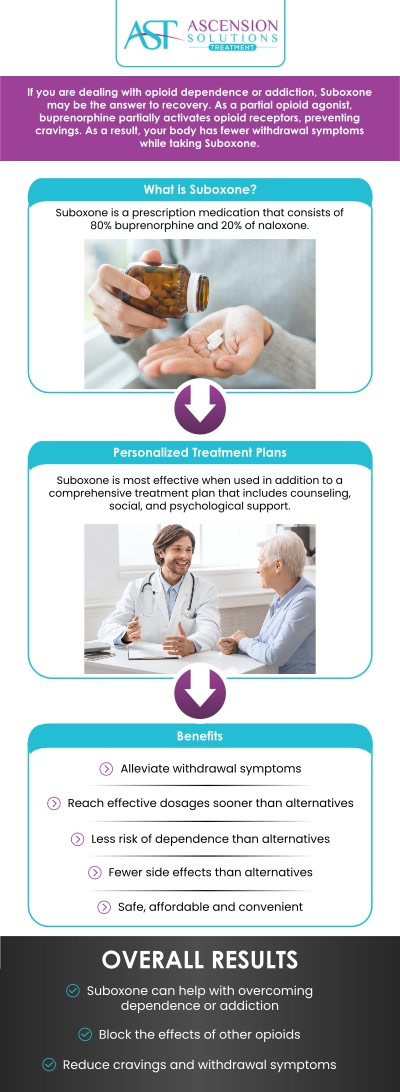
Table of Contents:
What signs indicate that someone may need Suboxone treatment?
Can Suboxone be considered after repeated opioid relapse or unsuccessful detox?
When can Suboxone treatment begin after the last opioid use?
Why is counseling often included with Suboxone treatment for opioid addiction?
How Do Dr. Jonathan Hall, MD, and the Team at Ascension Solutions Treatment Determine Whether Suboxone Is Appropriate for Opioid Use Disorder?
Suboxone may be considered when a person shows signs of opioid use disorder and has difficulties cutting back on or quitting opioid use without experiencing severe withdrawal symptoms or urges. Buprenorphine-based medications such as Suboxone are FDA-approved treatments for opioid use disorder and can help reduce withdrawal symptoms and cravings.
A need for examination may be indicated by the following signs:
• Strong or persistent opioid cravings
• Withdrawal symptoms when opioid use is reduced or stopped
• Repeated unsuccessful attempts to stop using opioids
• Ongoing opioid use even when it is causing problems with health, work, relationships, or daily life.
• Spending significant time obtaining, using, or recovering from opioids
• Resuming opioid use after a period of stopping or remaining opioid-free.
At Ascension Solutions Treatment, our clinical team evaluates opioid use history, withdrawal symptoms, cravings, previous recovery attempts, and overall health to determine whether Suboxone may be appropriate. Treatment is individualized so patients can receive medication management and ongoing support based on their specific opioid use disorder needs.
Suboxone may be considered for people who have experienced repeated opioid relapse or have been unable to maintain recovery after detoxification alone. Opioid use disorder is a chronic condition, and FDA-approved medications such as buprenorphine can be used as part of ongoing treatment to reduce cravings and withdrawal symptoms.
Detoxification addresses the immediate withdrawal period but does not necessarily provide ongoing protection against cravings or recurrence of opioid use. For some patients, medication treatment can provide greater stability and allow them to remain engaged in recovery care rather than repeatedly cycling through withdrawal and opioid use.
Before recommending Suboxone, our team at Ascension Solutions Treatment considers prior detox attempts, relapse patterns, opioid use histories, cravings, withdrawal experiences, and treatment objectives. An individualized treatment plan may combine medication management with behavioral and recovery support to help patients maintain longer-term stability.
The appropriate time to begin Suboxone depends on the opioid previously used, the timing of the last dose, and the presence of withdrawal symptoms. With a standard buprenorphine induction, treatment is generally started after objective signs of opioid withdrawal have developed rather than according to a single fixed number of hours.
Starting Suboxone too soon can cause precipitated withdrawal because buprenorphine can displace other opioids from opioid receptors. The waiting period may therefore differ for short-acting opioids, long-acting opioids, or fentanyl exposure, making clinical assessment especially important before the first dose.
At Ascension Solutions Treatment, our team considers recent opioid use, the type of opioid involved, withdrawal severity, medical history, and other relevant factors before initiating Suboxone. This individualized approach helps determine an appropriate starting time while reducing the risk of precipitated withdrawal.
Counseling is often included with Suboxone treatment because medication and behavioral support address different aspects of opioid use disorder. Suboxone can help manage physical withdrawal symptoms and cravings, while counseling may help patients recognize triggers, develop coping strategies, address behavioral patterns, and strengthen recovery skills. SAMHSA recommends buprenorphine as part of a comprehensive treatment plan that can include counseling and other supportive services.
Counseling may also help patients work through challenges that can affect recovery, including stress, relationships, motivation, and situations associated with previous opioid use. Depending on individual needs, support may include individual counseling, behavioral therapies, group-based services, or other recovery resources. However, access to counseling should not unnecessarily delay appropriate medication treatment for opioid use disorder.
At Ascension Solutions Treatment, our team can combine Suboxone medication management with appropriate behavioral and recovery support based on each patient’s needs. This individualized approach helps address both the physical and behavioral components of opioid use disorder while supporting continued engagement in recovery.
Dr. Jonathan Hall, MD, and the team at Ascension Solutions Treatment determine whether Suboxone is appropriate by completing an individualized evaluation of the patient’s opioid use history, current withdrawal symptoms, cravings, previous treatment attempts, medical history, and other medications. Buprenorphine, one of the active ingredients in Suboxone, is an FDA-approved medication for opioid use disorder and can help reduce withdrawal symptoms and cravings when used as part of an appropriate treatment plan.
Dr. Jonathan Hall, MD, also considers the timing of the patient’s most recent opioid use, potential medication interactions, treatment goals, and whether Suboxone can be started safely without increasing the risk of precipitated withdrawal. At Ascension Solutions Treatment, our team uses these findings to develop a personalized medication plan and provides continued monitoring to assess symptom control, treatment response, and ongoing recovery needs.
For more information, contact us or request an appointment online. We are conveniently located at 3780 Holcomb Bridge Road Suite D2, Peachtree Corners, GA 30092. We serve patients from Peachtree Corners GA, Asheville NC, Swannanoa NC, Johns Creek GA, Woodfin NC, Biltmore Forest NC, Fairview NC, Roswell GA, Dunwoody GA, Pittsburg GA, Western North Carolina, and the surrounding areas.

Read Our Latest Google Reviews



Additional Services You May Need
▸ Addiction
▸ Medication Assisted Treatment
▸ Suboxone Treatment
▸ Behavioural Therapy
▸ Detox
▸ Vivitrol
▸ Sublocade
▸ Buprenorphine
▸ Depression
▸ Anxiety Disorder
▸ Subutex
▸ Alcohol Detox
▸ Brixadi
▸ Regenerative Medicine
▸ Ozone Therapy
▸ Spravato Treatment
▸ Hormone Replacement Therapy


 Send Text
 How May I Help You?