

How Does Suboxone Work to Manage Opioid Cravings in Asheville, NC?
Suboxone works by partially activating opioid receptors in the brain, helping reduce cravings and withdrawal symptoms associated with opioid use disorder. It supports more stable physical functioning during recovery and can reduce the effects of other opioids. At Ascension Solutions Treatment in Asheville, NC, Dr. Jonathan Hall, MD, and our team provide personalized Suboxone treatment to help patients manage opioid dependence through medication-assisted treatment, medical supervision, and ongoing recovery support. Our clinic develops individualized care plans based on each patient’s medical history, symptoms, and treatment goals. We combine prescription management with behavioral health support to help patients address both the physical and emotional challenges of opioid addiction. For more information, contact us today or schedule an appointment online. We are conveniently located at 875 A Tunnel Rd, Asheville, NC 28805.
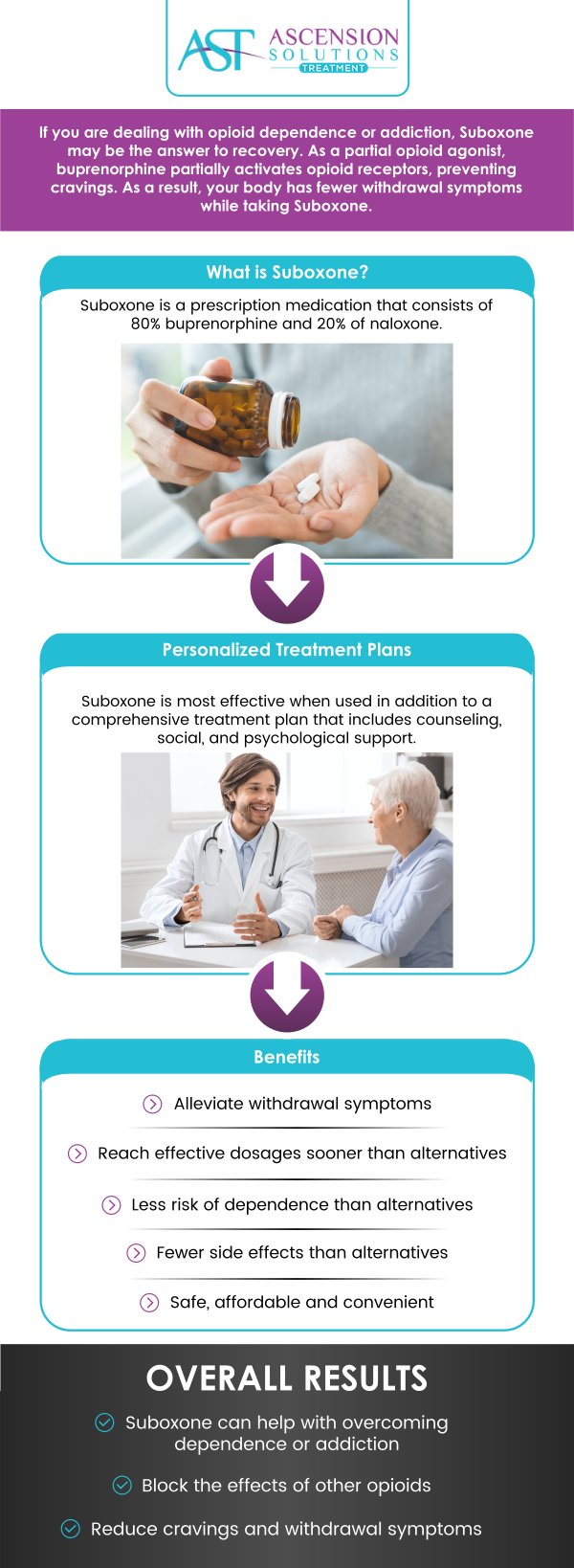
Table of Contents:
How does Suboxone affect opioid receptors in the brain?
How does Suboxone help control opioid cravings during recovery?
How does Suboxone reduce physical opioid withdrawal symptoms?
How long does it take for Suboxone to start working?
Can Suboxone continue working if opioid cravings return during treatment?
What precautions should patients follow while taking Suboxone?
Personalized Suboxone Treatment With Dr. Jonathan Hall, MD, and Our Team in Asheville, NC
Does Suboxone completely eliminate opioid cravings?
Does Suboxone make other opioids completely ineffective?
Why can withdrawal symptoms worsen after taking Suboxone too early?
Can Suboxone cause physical dependence during treatment?
Can Suboxone treatment affect sleep or concentration?
Is Suboxone treatment effective without behavioral counseling?
What should I do if my cravings increase while taking Suboxone?
Medical References
Suboxone works by attaching to specific opioid receptors in the brain and partially activating them. These receptors are involved in physical dependence, withdrawal symptoms, and the effects of opioids. By providing controlled receptor activity, Suboxone helps reduce withdrawal discomfort and cravings without producing the same level of effects associated with fully activating these receptors. It can also reduce the effects of other opioids, although this protection is not complete.
Suboxone contains a second active component designed to discourage certain forms of misuse, particularly injection. Its main treatment effect when taken as directed comes from the component that partially activates opioid receptors. At Ascension Solutions Treatment, our team helps patients understand how the medication works, why correct administration matters, and what symptoms should be discussed with the prescribing doctor.
Suboxone helps control opioid cravings by reducing the physical drive to use opioids. When a person develops opioid dependence, changes in the body’s response to opioids can lead to strong urges, particularly when medication effects wear off or withdrawal symptoms begin. Suboxone helps maintain steadier activity at opioid receptors, reducing these physical cravings and supporting more consistent symptom control.
However, cravings may also develop in response to stress, emotional distress, familiar environments, or reminders of previous substance use. Medication does not automatically eliminate these triggers. At our clinic, Dr. Jonathan Hall, MD, and our team provide individualized treatment planning and behavioral health support to help patients recognize challenges, develop coping strategies, and address concerns that may affect recovery.
Suboxone helps relieve withdrawal symptoms by providing controlled activity at opioid receptors when the body has become physically dependent on opioids. This can reduce symptoms such as sweating, muscle aches, nausea, restlessness, and abdominal discomfort. The degree of relief depends on the patient’s medical history, previous opioid exposure, and response to treatment.
Starting Suboxone requires careful timing. Taking it too soon after certain opioids can cause precipitated withdrawal, a sudden worsening of withdrawal symptoms. At Ascension Solutions Treatment, our medical team evaluates recent opioid use and current symptoms before recommending treatment initiation. We provide medical guidance to help patients begin treatment appropriately rather than attempting to manage prescription timing without supervision.
Suboxone can begin relieving withdrawal symptoms and cravings after an appropriately timed initial dose, but the exact onset and degree of relief vary. Some patients experience improvement during the early stages of treatment, while others need additional monitoring and adjustments before symptoms are adequately controlled. Previous opioid use, withdrawal severity, and individual treatment response can affect the process.
Initial symptom relief does not necessarily mean that treatment has reached a stable level. Our team monitors how patients respond, including whether cravings decrease, withdrawal symptoms improve, and side effects develop. Dr. Hall uses these findings to guide individualized treatment decisions. Patients should not increase, decrease, or repeat doses without instructions from their prescribing clinician.
Suboxone can remain effective during long-term treatment, but changes in cravings do occur. Increased stress, missed doses, changes in other medications, or ongoing substance use may affect how patients feel. Returning cravings do not automatically mean treatment has failed, but they should be discussed with a healthcare professional to determine whether additional support or changes to the treatment plan are appropriate.
At Ascension Solutions Treatment, our approach includes regular medical monitoring and individualized recovery support. We review symptoms, medication adherence, side effects, and behavioral health concerns to identify factors affecting treatment progress. Depending on the evaluation, Dr. Hall may recommend changes to medical management or additional counseling support. Our goal is to provide consistent care while recognizing that recovery needs can change over time.
Suboxone can cause side effects such as headache, nausea, constipation, sweating, dizziness, and sleep disturbances. More serious risks include breathing problems, excessive sedation, liver complications, and allergic reactions. Combining Suboxone with alcohol, sedatives, or other substances that slow breathing increases the risk of dangerous complications. Patients should discuss all medications, substance use, pregnancy, and existing medical conditions with their prescribing clinician.
Suboxone films dissolve in the mouth and can also contribute to dental problems. After the medication has completely dissolved, patients should gently rinse their teeth and gums with water and swallow, then wait at least one hour before brushing. Regular dental care is recommended. Our team encourages patients to follow prescribing instructions, avoid sharing medication, and keep it securely stored away from children. Severe breathing difficulty, unconsciousness, or suspected overdose requires immediate emergency medical attention. Call 911.
At Ascension Solutions Treatment, Dr. Jonathan Hall, MD, is a family medicine physician with experience in addiction treatment and integrative medicine. He provides individualized care for patients managing opioid use disorder, considering their physical symptoms, treatment history, medical conditions, and ongoing recovery needs. Our clinic emphasizes physician-guided treatment decisions, regular monitoring, and clear communication throughout the recovery process.
Our team works alongside Dr. Hall to provide medication-assisted treatment, behavioral counseling, and continued support for patients experiencing opioid cravings and withdrawal symptoms. We help patients understand how Suboxone works, recognize changes in their symptoms, and participate in appropriate follow-up care. Through individualized medical treatment and behavioral health support, we aim to help patients improve stability and maintain progress toward their recovery goals.
For more information about how Suboxone works or to discuss treatment options, contact Ascension Solutions Treatment to request a consultation with Dr. Jonathan Hall, MD, and our team. Our clinic is located at 875 A Tunnel Rd, Asheville, NC 28805, serving patients from Asheville, Arden, Candler, Weaverville, Swannanoa, Woodfin, and nearby communities.
Frequently Asked Questions
No. Suboxone can significantly reduce opioid cravings, but some patients continue to experience occasional urges related to stress, emotional triggers, or changes in their treatment needs.
No. Suboxone can reduce the effects of other opioids, but it does not completely block them or eliminate overdose risk. Combining opioids can still cause serious complications.
Starting Suboxone before the appropriate stage of withdrawal can rapidly change opioid receptor activity and cause precipitated withdrawal. Medical supervision helps determine safer treatment timing.
Yes. Physical dependence can develop with prescribed Suboxone, but this is different from addiction. Abruptly stopping treatment can cause withdrawal symptoms and increase the risk of returning to opioid use.
Yes. Some patients experience sleep disturbances, dizziness, or drowsiness. Patients should avoid driving or operating dangerous equipment until they understand how treatment affects them.
Suboxone can reduce withdrawal symptoms and cravings even when counseling is unavailable. Behavioral support can address additional recovery needs, but lack of counseling should not prevent access to appropriate medication treatment.
Contact your prescribing clinician to discuss the change. Our doctor can review medication adherence, current symptoms, stressors, and treatment response before recommending appropriate adjustments.
• Substance Abuse and Mental Health Services Administration (SAMHSA) — How Medication Treatment Works for Opioid Use Disorder
• Centers for Disease Control and Prevention (CDC) — Clinical Guidance for Treating Opioid Use Disorder
• U.S. National Library of Medicine (DailyMed) — FDA-Approved Suboxone Prescribing Information
• U.S. Food and Drug Administration (FDA) — Oral Health Precautions for Dissolvable Opioid Treatment

Read Our Latest Google Reviews



Additional Services You May Need
▸ Addiction
▸ Medication Assisted Treatment
▸ Suboxone Treatment
▸ Behavioural Therapy
▸ Detox
▸ Vivitrol
▸ Sublocade
▸ Buprenorphine
▸ Depression
▸ Anxiety Disorder
▸ Subutex
▸ Alcohol Detox
▸ Brixadi
▸ Regenerative Medicine
▸ Ozone Therapy


 Send Text
 How May I Help You?