

How Does Sublocade Work for Opioid Addiction?
Sublocade is a long-acting, monthly injectable treatment for opioid use disorder that helps reduce cravings and withdrawal symptoms. It works by releasing medication gradually into the body, helping patients maintain consistent treatment without taking a daily dose. At Ascension Solutions Treatment in Asheville, NC, Dr. Jonathan Hall, MD, and our team provide personalized medication-assisted treatment (MAT) to support patients through opioid addiction recovery. Our clinic combines medical evaluation, ongoing monitoring, and behavioral health support to help patients manage their symptoms and work toward long-term recovery. Treatment is tailored to each patient’s medical history, response, and individual needs. Contact us for more information, or book an appointment today. We are conveniently located at 875 A Tunnel Rd, Asheville, NC 28805.
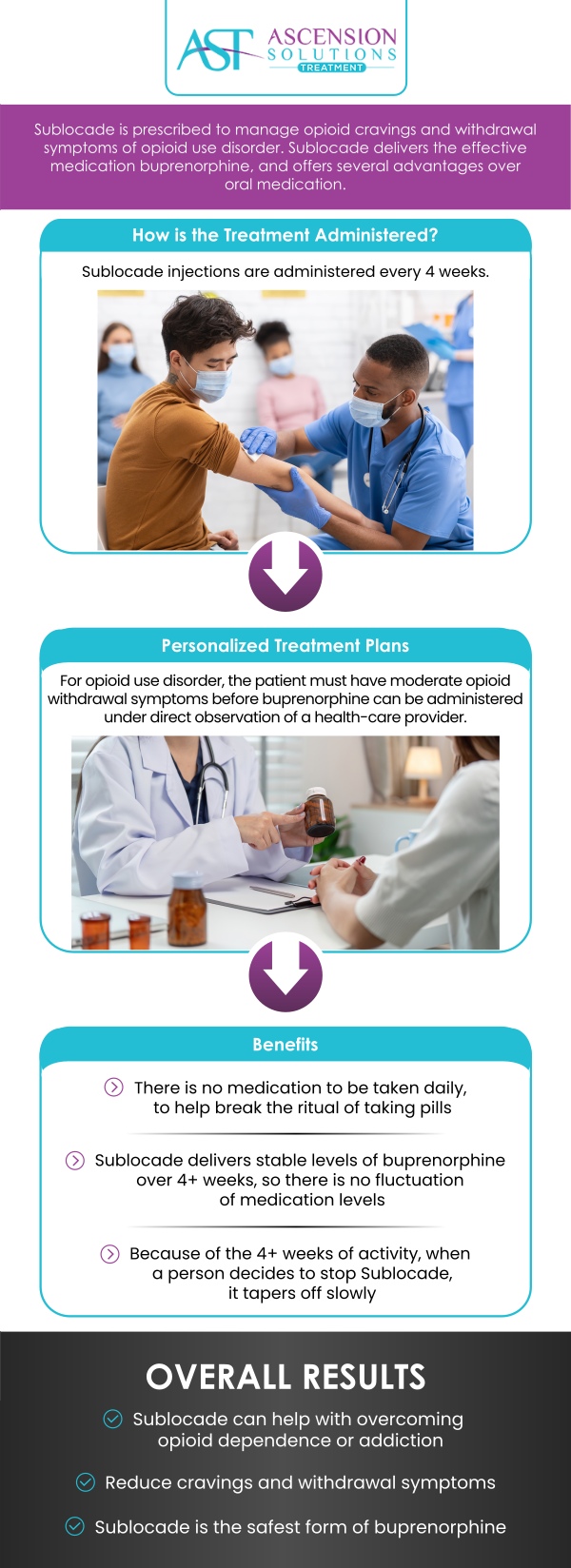
Table of Contents:
How does Sublocade work in the brain to reduce opioid cravings and withdrawal symptoms?
What happens inside the body after receiving a Sublocade injection?
How soon does Sublocade begin working, and how long do its effects last?
What should patients know before starting Sublocade treatment?
What are the possible side effects and safety precautions of Sublocade treatment?
Personalized Sublocade Treatment With Dr. Jonathan Hall, MD, and Our Team in Asheville, NC
Does Sublocade completely stop opioid cravings?
Can you still experience withdrawal symptoms while receiving Sublocade?
Can Sublocade be administered at home?
Is it normal to feel a lump after a Sublocade injection?
What happens if I miss my monthly Sublocade injection?
Can Sublocade be used alongside behavioral therapy?
Can Sublocade prevent an opioid overdose?
How long can someone remain on Sublocade treatment?
Medical References
Sublocade works by attaching to opioid receptors in the brain and partially activating them. These receptors are involved in the body’s response to opioids, including physical dependence, withdrawal, and cravings. By maintaining activity at these receptors, Sublocade helps reduce uncomfortable withdrawal symptoms and the urge to use opioids. It can also weaken the effects of other opioids, although it does not completely block them or eliminate overdose risk.
Because Sublocade releases medication gradually, patients can maintain more consistent treatment levels without taking medication every day. This may help reduce fluctuations in withdrawal symptoms and cravings. At Ascension Solutions Treatment, our team monitors each patient’s response and makes individualized recommendations to support treatment stability and recovery.
After Sublocade is injected beneath the skin, it forms a small, solid deposit that gradually releases medication into the bloodstream. This process allows the treatment to remain active over an extended period rather than being absorbed all at once. The medication continues working on opioid receptors in the brain, helping manage physical dependence and withdrawal symptoms between scheduled injections.
A healthcare professional administers the injection into the abdomen, thigh, buttock, or back of the upper arm. Patients may notice a small lump beneath the skin, which usually becomes smaller over time. Our team provides instructions about injection-site care, including avoiding rubbing or massaging the area. Patients cannot administer Sublocade themselves because it must be given through a specially certified healthcare program.
Sublocade begins releasing medication after the injection, but the time needed to achieve adequate symptom control varies. Patients must first receive an appropriate treatment that dissolves in the mouth to establish tolerability, or they may transition from an existing treatment regimen. A healthcare professional determines when the first injection can be given and monitors for worsening withdrawal symptoms or excessive sedation.
Sublocade is designed to provide medication coverage for approximately one month, with ongoing injections scheduled according to the prescribed treatment plan. Medication levels may build with repeated doses, and some medication can remain in the body for months after treatment stops. At our clinic, we evaluate symptom control, response to treatment, and follow-up needs rather than assuming every patient will experience identical results.
Before beginning Sublocade, patients need a medical evaluation to determine whether the treatment is appropriate. The doctor reviews opioid use history, withdrawal symptoms, previous treatment, medical conditions, and current medications. Patients should disclose liver problems, breathing difficulties, allergies, pregnancy, breastfeeding, and any substances that may interact with treatment. Sublocade should not be given to someone with a known allergy to its ingredients.
At Ascension Solutions Treatment, Dr. Jonathan Hall, MD, and our team assess each patient’s medical needs before developing a treatment plan. Patients who have not already started appropriate prescription treatment must first receive a supervised dose of medication that dissolves in the mouth. Our clinic also considers counseling and behavioral health needs because medication is one part of opioid addiction care.
Sublocade may cause constipation, nausea, headache, tiredness, or discomfort around the injection site. More serious concerns include breathing problems, excessive sedation, allergic reactions, and liver problems. Combining treatment with alcohol, sedatives, or other opioids can increase the risk of dangerous breathing complications. Patients should avoid alcohol, discuss all other medications with their clinician, and report any unusual symptoms promptly.
Our team emphasizes ongoing medical supervision and patient safety throughout treatment. Sublocade does not guarantee protection from overdose, and patients should discuss access to an opioid overdose reversal medication with their clinician. Severe breathing problems, extreme drowsiness, or difficulty waking someone require immediate emergency medical attention. Patients should also avoid changing or stopping treatment without consulting their prescribing clinician.
At Ascension Solutions Treatment, Dr. Jonathan Hall, MD, provides individualized care for patients managing opioid use disorder. With a background in family medicine and addiction treatment, Dr. Hall considers each patient’s medical history, current symptoms, previous treatment experiences, and recovery goals when developing an appropriate care plan. Our clinic focuses on supporting both physical stability and ongoing recovery needs.
Our team works alongside Dr. Hall to provide medication-assisted treatment, behavioral therapy, counseling, and ongoing monitoring. We help patients understand how Sublocade works, what to expect during treatment, and when additional medical evaluation may be necessary. Regular follow-up allows us to assess symptoms, discuss concerns, and adjust the overall treatment plan when appropriate. Contact us for more information, or book an appointment today. We are conveniently located at 875 A Tunnel Rd, Asheville, NC 28805. We serve patients from Asheville NC, Weaverville NC, Arden NC, Candler NC, Swannanoa NC, Woodfin NC, and the surrounding areas.
Frequently Asked Questions
Sublocade can significantly reduce opioid cravings, but it may not eliminate them for every patient. Treatment response varies, and ongoing medical monitoring helps determine whether symptoms are adequately controlled.
Yes. Some patients may experience withdrawal symptoms, particularly during treatment initiation or when treatment needs adjustment. Persistent or worsening symptoms should be discussed with the prescribing clinician.
No. Sublocade must be administered beneath the skin by a qualified healthcare professional through a certified treatment program. It is not intended for self-injection.
Yes. A small lump may develop beneath the skin where the medication was injected. It usually decreases in size over time. Patients should not rub, massage, or attempt to remove it.
Contact your healthcare provider as soon as possible to arrange the missed injection. Our provider will review your treatment schedule and symptoms before determining the appropriate next step.
Yes. Sublocade is intended to be part of a treatment plan that includes counseling and psychosocial support. Behavioral therapy can help patients address emotional concerns, triggers, and recovery challenges.
Sublocade may reduce opioid use and cravings, but it does not completely protect against overdose. Patients should discuss overdose prevention and emergency reversal treatment with their healthcare provider.
Treatment duration depends on individual medical needs, symptom control, and recovery progress. Some patients benefit from extended treatment. Decisions about continuing or discontinuing injections should be made with a healthcare professional.
• U.S. National Library of Medicine (DailyMed) — FDA Prescribing Information and Safety Guidance for Sublocade
• Substance Abuse and Mental Health Services Administration (SAMHSA) — Medication Treatment and Opioid Use Disorder
• Centers for Disease Control and Prevention (CDC) — Treatment of Opioid Use Disorder
• CDC — Clinical Guidance for Treating Opioid Use Disorder

Read Our Latest Google Reviews



Additional Services You May Need
▸ Addiction
▸ Medication Assisted Treatment
▸ Suboxone Treatment
▸ Behavioural Therapy
▸ Detox
▸ Vivitrol
▸ Sublocade
▸ Buprenorphine
▸ Depression
▸ Anxiety Disorder
▸ Subutex
▸ Alcohol Detox
▸ Brixadi
▸ Regenerative Medicine
▸ Ozone Therapy


 Send Text
 How May I Help You?