

Transition From Suboxone to Sublocade for Opioid Addiction Recovery
Transitioning from Suboxone to Sublocade can offer an alternative for adults receiving buprenorphine treatment for moderate-to-severe opioid use disorder. Patients already taking and tolerating transmucosal buprenorphine may be able to transition directly to a Sublocade injection when clinically appropriate. At Ascension Solutions Treatment, Dr. Jonathan Hall, MD, and our team evaluate each patient’s current Suboxone treatment, withdrawal symptoms, cravings, recovery progress, and overall health before recommending a transition. For more information, contact us or request an appointment online. We are conveniently located at 3780 Holcomb Bridge Road Suite D2, Peachtree Corners, GA 30092.
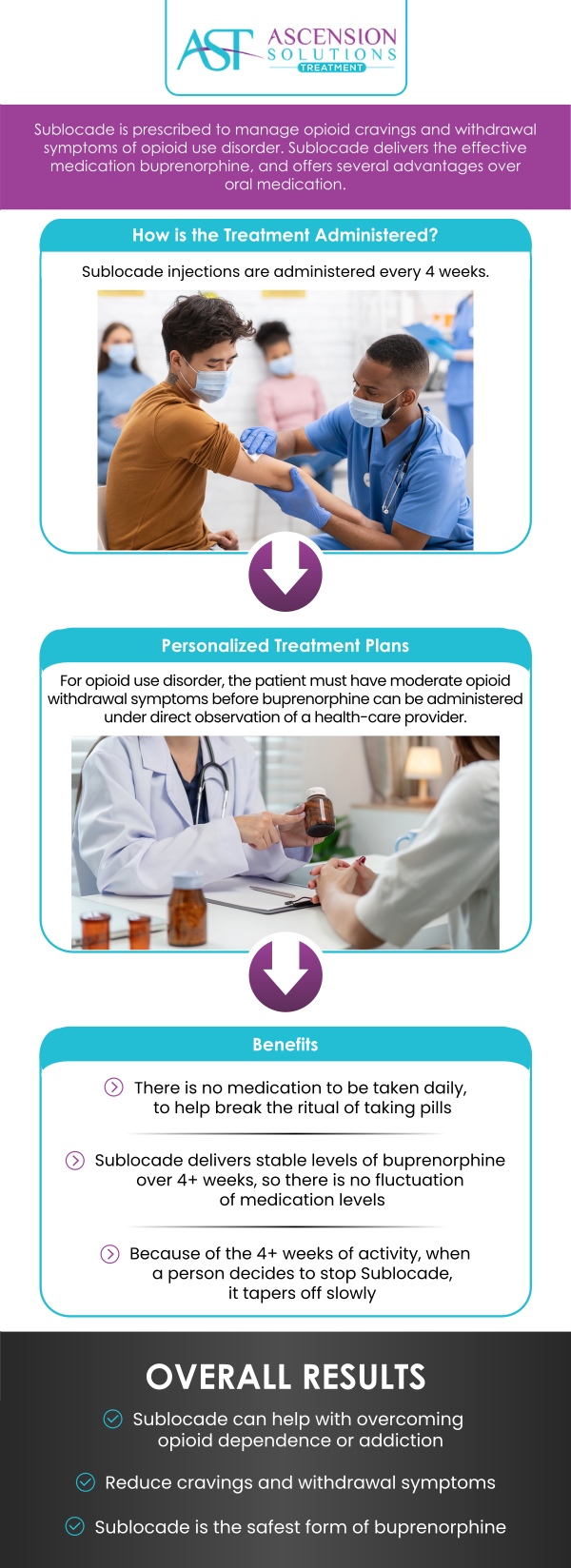
Table of Contents:
How long should a patient take Suboxone before switching to Sublocade?
What happens during the transition from daily Suboxone to monthly Sublocade?
How is the appropriate Sublocade dose selected after Suboxone treatment?
Can switching to Sublocade help patients who struggle with daily dosing?
How Do Dr. Jonathan Hall, MD, and the Team at Ascension Solutions Treatment Guide the Transition From Suboxone to Sublocade?
There is no longer a universal requirement that every patient take Suboxone for at least seven days before switching to Sublocade. Current FDA prescribing information states that Sublocade may be used in patients who have initiated treatment with a single dose of transmucosal buprenorphine or who are already being treated with buprenorphine.
For someone already taking Suboxone, the timing of the transition depends on whether buprenorphine is being tolerated and whether the patient is clinically appropriate for extended-release treatment. Patients who are not currently receiving buprenorphine should first receive a test dose of transmucosal buprenorphine and be monitored for tolerability before the first Sublocade injection; when appropriate, the first injection may be given the same day.
At Ascension Solutions Treatment, our clinical team reviews each patient’s current Suboxone dose, withdrawal symptoms, cravings, treatment response, and overall health before recommending a transition to Sublocade. The goal is to determine an individualized timing and dosing approach that supports safe, consistent treatment for opioid use disorder.
Transitioning from daily Suboxone to monthly Sublocade involves replacing daily transmucosal buprenorphine treatment with a long-acting buprenorphine injection. Current prescribing information allows Sublocade for adults with moderate-to-severe opioid use disorder who have initiated treatment with a dose of transmucosal buprenorphine or who are already receiving buprenorphine. The transition should be planned and supervised by a qualified healthcare professional.
• Clinical assessment: The care team reviews the patient’s current Suboxone dose, withdrawal symptoms, cravings, treatment response, medical history, and overall readiness for extended-release treatment.
• Buprenorphine tolerability: Patients already taking Suboxone have established exposure to buprenorphine. Patients who are not currently taking buprenorphine may receive a transmucosal dose first so tolerability can be confirmed before Sublocade is given.
• First Sublocade injection: Once clinically appropriate, Sublocade is administered by a certified healthcare professional as a subcutaneous injection. The medication then releases buprenorphine gradually over an extended period.
• Monitoring after transition: Patients are monitored for withdrawal symptoms, sedation, medication tolerability, cravings, and other clinical concerns. Follow-up visits help determine whether the dosing plan continues to meet the patient’s treatment needs.
• Ongoing monthly care: Sublocade is designed to reduce the need for daily buprenorphine dosing while maintaining ongoing medication treatment for opioid use disorder.
At Ascension Solutions Treatment, our team personalizes the transition from Suboxone to Sublocade based on each patient’s current treatment, response to buprenorphine, withdrawal control, cravings, and recovery needs. Ongoing assessment and communication help support a safe transition and continued opioid use disorder treatment.
The appropriate Sublocade dose after Suboxone treatment is selected based on the patient’s current buprenorphine treatment, clinical stability, withdrawal symptoms, cravings, treatment response, and overall health. Sublocade is used for moderate-to-severe opioid use disorder in patients who have initiated transmucosal buprenorphine or are already being treated with buprenorphine.
For many patients, Sublocade treatment begins with 300 mg injections during the initial treatment period. After the first two 300 mg injections, the recommended maintenance dose is generally 100 mg monthly, although a healthcare professional may continue or increase the maintenance dose to 300 mg when the clinical response is inadequate and the higher dose is tolerated.
At Ascension Solutions Treatment, we evaluate each patient’s response to Suboxone, control of cravings and withdrawal symptoms, medication tolerability, and ongoing recovery needs before determining an appropriate Sublocade dosing plan. Continued follow-up allows the treatment approach to be adjusted when clinically appropriate while supporting consistent care for opioid use disorder.
Switching to Sublocade may help patients who have difficulty remembering or maintaining a daily buprenorphine dosing routine. Sublocade is a long-acting buprenorphine injection that is administered by a healthcare professional and provides medication over an extended period, reducing the need to take tablets or films every day.
For some patients, monthly treatment can make medication management more convenient and may reduce the risk of missed doses, accidental loss, or diversion. Sublocade can also provide more consistent buprenorphine exposure, which may help support ongoing control of opioid cravings and withdrawal symptoms when the treatment is clinically appropriate.
At Ascension Solutions Treatment, we evaluate each patient’s current buprenorphine treatment, recovery progress, cravings, withdrawal symptoms, and ability to follow a daily medication schedule before recommending Sublocade. If a monthly injection is appropriate, our team provides continued monitoring and individualized support throughout the transition and ongoing opioid use disorder treatment.
Dr. Jonathan Hall, MD, and the team at Ascension Solutions Treatment guide the transition from Suboxone to Sublocade by carefully reviewing each patient’s current buprenorphine treatment, withdrawal symptoms, cravings, medication response, and overall recovery progress. This evaluation helps determine whether a long-acting injectable form of buprenorphine is appropriate and allows the care plan to be tailored to the patient’s clinical needs, treatment goals, and ability to maintain daily dosing.
Once the transition is appropriate, Dr. Jonathan Hall, MD, and our team coordinate the timing of the first Sublocade injection, explain what to expect, and continue monitoring for withdrawal symptoms, cravings, side effects, and treatment response. Ascension Solutions Treatment provides ongoing follow-up so the dosing approach can be adjusted when clinically appropriate, helping patients move from daily Suboxone to monthly Sublocade with consistent medical support throughout their opioid use disorder recovery.
For more information, contact us or request an appointment online. We are conveniently located at 3780 Holcomb Bridge Road Suite D2, Peachtree Corners, GA 30092. We serve patients from Peachtree Corners GA, Asheville NC, Swannanoa NC, Johns Creek GA, Woodfin NC, Biltmore Forest NC, Fairview NC, Roswell GA, Dunwoody GA, Pittsburg GA, Western North Carolina, and the surrounding areas.

Read Our Latest Google Reviews



Additional Services You May Need
▸ Addiction
▸ Medication Assisted Treatment
▸ Suboxone Treatment
▸ Behavioural Therapy
▸ Detox
▸ Vivitrol
▸ Sublocade
▸ Buprenorphine
▸ Depression
▸ Anxiety Disorder
▸ Subutex
▸ Alcohol Detox
▸ Brixadi
▸ Regenerative Medicine
▸ Ozone Therapy
▸ Spravato Treatment
▸ Hormone Replacement Therapy


 Send Text
 How May I Help You?