

Group Psychotherapy Specialist in Asheville, NC
A group psychotherapy specialist in Asheville, NC can help individuals address addiction, anxiety, depression, and other emotional challenges in a supportive setting. At Ascension Solutions Treatment, Dr. Jonathan Hall, MD, and our team provide structured group sessions focused on coping skills, communication, accountability, and recovery progress. Group psychotherapy allows patients to learn from shared experiences while working toward personal treatment goals. Our clinic provides individualized support to help each patient stay engaged in meaningful, ongoing care. For more information, contact us today or schedule an appointment online. We are conveniently located at 875 A Tunnel Rd, Asheville, NC 28805.
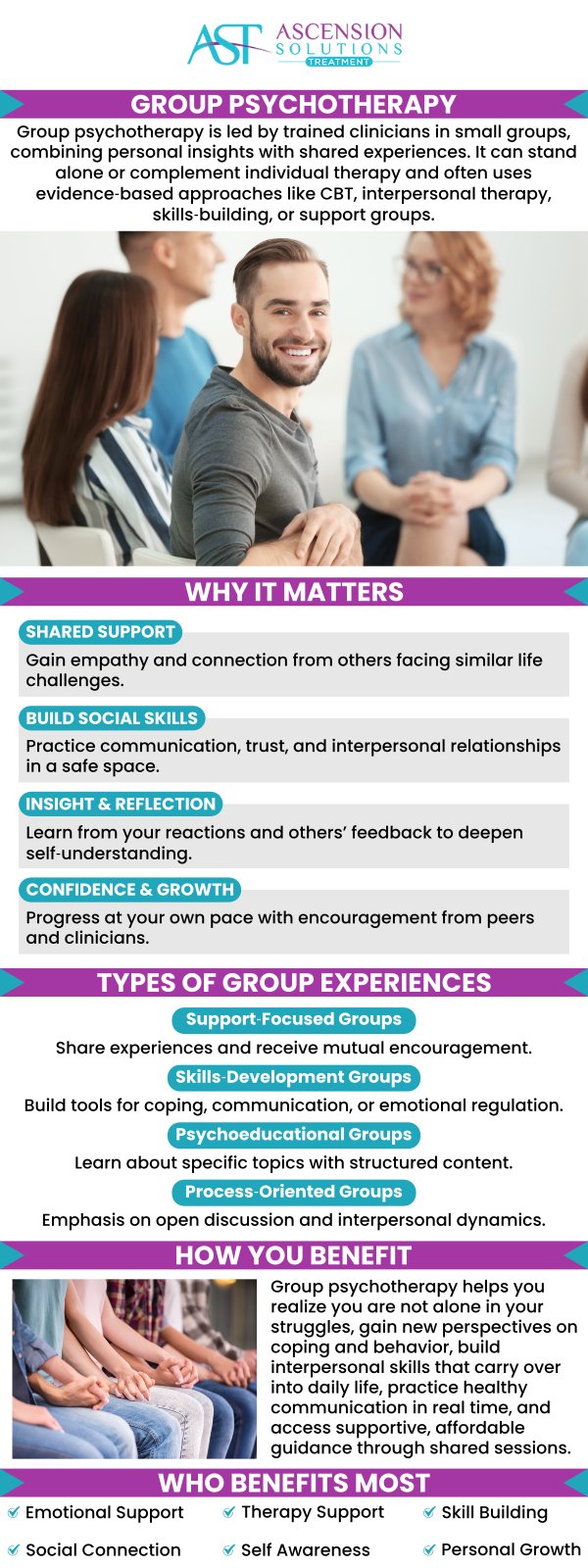
Table of Contents:
How does group psychotherapy support addiction recovery?
What happens during a group psychotherapy session in Asheville, NC?
How is group psychotherapy different from individual counseling?
Can group psychotherapy address addiction with anxiety or depression?
How can new patients begin group psychotherapy for addiction recovery in Asheville, NC?
How Do Dr. Jonathan Hall, MD, and the Team at Ascension Solutions Treatment Incorporate Group Psychotherapy Into Addiction Recovery in Asheville, NC?
Group psychotherapy can support addiction recovery by providing a structured setting where individuals can explore behaviors, emotions, triggers, and thought patterns related to substance use. Under the guidance of a trained mental health professional, participants can learn coping strategies, improve communication skills, identify situations that may increase the risk of substance use, and develop healthier responses to stress. Group therapy can also reduce feelings of isolation by allowing participants to recognize that others may be working through similar recovery challenges. Research-based addiction treatment commonly incorporates behavioral therapies alongside other appropriate treatment approaches.
Another important part of group psychotherapy is the opportunity to practice accountability and receive constructive support. Listening to different perspectives can help participants recognize behaviors or patterns they may not have noticed on their own. At Ascension Solutions Treatment, group psychotherapy in Asheville, NC, provides a guided environment where patients can develop coping skills, discuss recovery-related concerns, and work toward meaningful personal goals. Sessions are designed to encourage connection and continued progress while respecting that every patient has an individual recovery experience.
A group psychotherapy session typically brings together several individuals who meet with a trained professional to discuss concerns related to emotional health, behavior, substance use, or recovery. The facilitator may introduce a topic, guide a discussion, teach coping techniques, or encourage participants to reflect on experiences that relate to their treatment goals. Depending on the type of group, sessions may address topics such as triggers, stress management, communication, emotional regulation, relationships, decision-making, or maintaining healthier behaviors. Group therapy models can vary, so every session does not follow the exact same structure.
Patients are generally encouraged to participate at a level that supports the therapeutic process while respecting appropriate group boundaries. Over time, regular participation may help individuals become more comfortable discussing challenges, recognizing personal patterns, and applying new coping skills outside therapy. At Ascension Solutions Treatment in Asheville, NC, Dr. Jonathan Hall, MD, and our team provide guided group sessions for addiction-related, behavioral, and emotional concerns. The goal is to create a supportive and structured setting that encourages accountability, connection, and continued recovery progress.
The primary difference between group psychotherapy and individual counseling is the treatment setting. Individual counseling generally involves one patient working directly with a mental health professional, allowing the session to focus closely on the patient’s personal history, symptoms, experiences, and individual treatment goals. Group psychotherapy involves multiple participants working with a trained facilitator. This creates opportunities to learn from other people’s experiences, practice interpersonal skills, receive feedback, and recognize that recovery challenges do not have to be faced in isolation. Substance use treatment programs may incorporate both individual and group approaches when appropriate.
Neither approach is automatically better for every person. Some patients benefit from the privacy and focused attention of individual counseling, while others find that interaction with peers adds valuable perspective and encouragement. In some treatment plans, both approaches may complement each other. At Ascension Solutions Treatment, our team considers each patient’s addiction history, emotional needs, recovery goals, and overall treatment plan when incorporating psychotherapy into care. Group psychotherapy can provide an additional source of structured support while helping patients strengthen skills that may be useful throughout recovery.
Group psychotherapy may be useful for people experiencing substance use concerns alongside symptoms of anxiety or depression. Mental health conditions and substance use disorders can occur together, and these are commonly described as co-occurring disorders. When appropriate, psychotherapy can help patients explore how stress, difficult emotions, negative thought patterns, and substance use behaviors may interact. Group sessions may provide opportunities to learn coping strategies, discuss emotional challenges, improve problem-solving skills, and develop healthier ways to respond to situations that previously contributed to substance use.
However, group psychotherapy should be tailored to the individual’s clinical needs and is not necessarily a replacement for individual therapy, psychiatric care, medication management, or other recommended treatment. Patients experiencing addiction together with anxiety or depression may require a treatment plan that addresses both concerns. At Ascension Solutions Treatment, our team evaluates emotional, behavioral, and addiction-related needs when developing care plans. Group psychotherapy may be incorporated when clinically appropriate to help patients strengthen coping skills, improve emotional awareness, and receive structured support as they work toward recovery goals.
Patients interested in group psychotherapy can begin by completing an evaluation with a treatment professional who can determine whether group-based care is suitable for their needs. An assessment may explore substance use patterns, recovery history, emotional concerns, current symptoms, previous treatment experiences, and personal goals. This information can help determine what type of therapeutic support may be appropriate and whether additional services should be included in the overall treatment plan. Group placement is an important clinical consideration because different groups may be designed around different needs, treatment stages, or therapeutic goals.
At Ascension Solutions Treatment in Asheville, NC, new patients can contact our clinic to discuss available addiction treatment and group psychotherapy services. Our team can explain what to expect, evaluate individual needs, and determine how group sessions may fit into a broader recovery plan. Patients can ask questions about participation, treatment goals, scheduling, and other aspects of care before beginning. The objective is to help each patient enter an appropriate treatment setting where they can develop practical recovery skills and receive continued professional support.
Group psychotherapy can serve as one component of a comprehensive addiction recovery plan rather than functioning as a stand-alone solution for every patient. Effective treatment may involve addressing substance use patterns, cravings, emotional triggers, relationships, coping skills, mental health concerns, and behaviors that can influence continued recovery. Group sessions provide a setting where patients can discuss relevant challenges, hear different perspectives, practice healthier ways of communicating, and strengthen skills they can apply in everyday situations. The collaborative setting can also help foster connection and accountability as patients work toward individual treatment goals.
Dr. Jonathan Hall, MD, and the team at Ascension Solutions Treatment incorporate group psychotherapy into addiction recovery by focusing on the individual needs of patients in Asheville, NC. Our guided sessions address emotional, behavioral, and addiction-related concerns while encouraging patients to develop coping strategies, share appropriate experiences, and remain engaged in their recovery process. Group psychotherapy may be combined with other clinically appropriate addiction treatment services based on each patient’s needs. Through continued evaluation and personalized care, our team works to provide a supportive environment where patients can strengthen recovery skills, address challenges, and make meaningful progress toward greater stability and well-being. For more information, contact us today or schedule an appointment online. We are conveniently located at 875 A Tunnel Rd, Asheville, NC 28805. We serve patients from Asheville NC, Weaverville NC, Arden NC, Candler NC, Swannanoa NC, Woodfin NC, and the surrounding areas.

Read Our Latest Google Reviews



Additional Services You May Need
▸ Addiction
▸ Medication Assisted Treatment
▸ Suboxone Treatment
▸ Behavioural Therapy
▸ Detox
▸ Vivitrol
▸ Sublocade
▸ Buprenorphine
▸ Depression
▸ Anxiety Disorder
▸ Subutex
▸ Alcohol Detox
▸ Brixadi
▸ Regenerative Medicine
▸ Ozone Therapy


 Send Text
 How May I Help You?